Neurodivergent-Affirming Coach | Quinn Geear Coaching
# Neurodivergent-Affirming Coaching
You may have spent years adjusting yourself before asking anything around you to adjust.
Rehearsing what you are going to say. Trying to make your communication land the right way. Hiding when you are overwhelmed. Pushing through environments that drain you. Adopting systems that seem to work for everyone else. Watching how other people do things and figuring out how to make yourself fit.
After enough years of that, it can get hard to tell what you need from what you have learned to tolerate.
Neurodivergent-affirming coaching gives us space to figure that out. We can look at what supports your attention, energy, communication, capacity, relationships, work, home, and everyday life while also staying connected to your strengths, values, identity, and what you want more room for.
My formal coach training and lived experience are centered in ADHD. I was diagnosed in my forties after more than twenty years in IT and leadership. I bring that lens into a broader neurodivergent-affirming approach that respects differences in communication, attention, sensory needs, energy, and ways of moving through the world.
What is neurodivergent-affirming ADHD coaching?
Neurodivergent-affirming coaching starts with understanding what you need in the environments and relationships you are already moving through.
That might mean looking at why you can focus deeply in one setting and barely access your attention in another. Why certain kinds of communication leave you confused or exhausted. Why an open office wipes you out. Why a change in plans throws off your whole day. Why you need more recovery after social or high-demand situations. Why the system everyone keeps recommending creates more work for you.
We look at the person and the conditions around them.
That includes your strengths, interests, values, energy, capacity, communication preferences, environment, sensory needs, relationships, expectations, and the amount of adapting you are already doing.
Then we figure out what support would help.
Common ways this shows up
Neurodivergence looks different from person to person. Some experiences that may bring someone to coaching include:
- You adjust yourself before asking the environment to change. You tolerate noise, unclear communication, unrealistic expectations, interruptions, or ways of working that drain you because you assume you are the one who needs to adapt.
- You spend a lot of energy monitoring yourself around other people. You rehearse what to say, edit your reactions, try to get your tone right, hide overwhelm, or think through how you are being perceived while the conversation is still happening.
- You are capable and still need support. You may do complex work, solve difficult problems, or care for other people while struggling with tasks that seem much simpler on paper.
- Your capacity can look inconsistent. Something may be accessible one day and take everything you have the next, depending on sleep, stress, sensory load, hormones, workload, social demands, or how much you have already used that day.
- You do not always know what to ask for. You know something about the environment, workload, communication, or expectations is making things harder, but translating that into a specific need or accommodation can be difficult.
- You have spent years compensating. Elaborate reminders, overpreparing, perfectionism, urgency, scripting, staying late, constantly checking yourself, or building your life around avoiding mistakes may be doing more work than anyone around you sees.
- You are tired of being measured against one version of functioning. Productivity, communication, organization, socializing, rest, and success may all look different for you than the version you were taught to aim for.
Who this support is for
This may be useful if you:
- Have ADHD and want coaching that takes a neurodivergent-affirming approach
- Were diagnosed later in life and are figuring out what you need now
- Have overlapping neurodivergent experiences that affect the context of your ADHD
- Have spent years masking, compensating, or pushing through
- Want help figuring out what kinds of environment, communication, structure, or support make life easier to access
- Want to ask for what you need without overexplaining or apologizing for it
- Want to make decisions based on your strengths, values, interests, and capacity
- Want more room to take up space as yourself
My formal training and specialty are in ADHD. If another neurodivergent condition is the main area where you need specialized support, we can talk openly about whether my scope fits what you are looking for.
How coaching supports this
We start by getting specific.
Where are you spending the most energy? What environments make things easier or harder? What communication helps you understand what is being asked? Where are you masking? What sensory, social, or executive-function demands keep piling up? What support have you already created for yourself without thinking of it that way?
We also look at your strengths, interests, values, and what gives you energy.
Then we experiment.
That could mean changing your environment, reducing ambiguity, adding external structure, using body doubling, planning around capacity, building in recovery time, preparing for a conversation, asking for an accommodation, changing a boundary, or approaching something in a different way.
Over time, you get more information about what supports you and more confidence using that information.
What working together looks like
We start with a free 50-minute Discovery Call where we talk about what is bringing you to coaching, what you want support with, and whether we want to work together.
From there, we meet over Zoom, usually weekly or every other week. You bring the context of your life, your experience, and what matters to you. I bring curiosity, reflective questions, creativity, structure, and an eye for patterns and connections.
Some sessions may be practical. Others may be about understanding why something keeps taking so much energy, preparing for a conversation, making a decision, or figuring out what you need.
How it works:
Step 1: Understanding what is happening
We map how attention, energy, motivation, capacity, communication, values, environment, and your neurodivergent symptoms show up and interact across your life.
We look at what feels easier, what gets harder, where you start monitoring or masking yourself, what drains you, what keeps getting stuck, what symptoms are getting in the way, what you are compensating for, and where you need more support.
Step 2: Experiment with support
Once we understand more about what is happening, we try things.
That might mean changing how information is communicated, adding structure, reducing sensory input, simplifying a process, using body doubling, building in recovery time, adjusting your environment, asking for an accommodation, or giving yourself another way to approach something.
We pay attention to what changes and adjust from there.
Step 3: Take up more space as yourself
Over time, you get clearer on what you need and more comfortable responding to it.
You can communicate your needs earlier, make decisions that feel more aligned, choose environments that support you better, mask with more awareness and choice, and spend less energy making yourself easier for everyone else to understand.
Meet your coach
I spent more than twenty years working in IT and leadership before I was diagnosed with ADHD in my forties.
For a lot of those years, I was successful at what I did while using far more energy than I understood to stay organized, meet expectations, manage how I showed up, and keep everything moving.
Getting diagnosed gave me context for things I had spent years adapting around.
My career taught me to notice patterns, understand context, and pay attention to what changes when the conditions around something change. My analog collage practice gave me space to follow curiosity, experiment, make connections, and work without forcing everything into a straight line.
Both show up in my coaching.
I am interested in what supports you, what drains you, where your strengths show up, what matters to you, and what happens when you have more room to do things in ways that fit you.
I trained through ADD Coach Academy and am continuing my credentialing work through ADDCA, ICF, and PAAC. ADHD is my formal coaching specialty, and neurodivergent-affirming practice is the lens I bring to that work.
What we can work on together
- Masking and taking up space. Understanding where you are editing, monitoring, or suppressing yourself and deciding where you want more choice.
- Figuring out what you need. Getting specific about communication, structure, environment, sensory input, time, recovery, or support that would make something easier to access.
- Work and accommodations. Identifying what would help you at work, figuring out what accommodations or adjustments you may want to ask for, and preparing for those conversations.
- Energy and capacity. Understanding what different environments, people, tasks, and demands take from you and planning around what you have available.
- Communication and relationships. Asking for clarification, explaining needs, navigating different communication styles, setting boundaries, and working through recurring friction.
- Daily life and executive function. Starting, prioritizing, remembering, switching tasks, following through, and creating external support around things you do not want to keep carrying in your head.
- Identity and self-trust. Making sense of a later diagnosis, questioning old assumptions about yourself, and trusting your own experience more.
- Strengths, values, and meaning. Making more room for what you are good at, what gives you energy, what you care about, and the kind of life you want to build.
Ways to support yourself
A few things you can experiment with:
- Look at the environment before assuming you need to try harder. Noise, interruptions, unclear expectations, social demands, lighting, physical space, or too many things happening at once may be part of what is making something harder.
- Ask for clearer communication. Written instructions, specific expectations, advance notice of changes, or a follow-up after a conversation can reduce how much you have to hold or reconstruct later.
- Move information outside your head. Use reminders, visible notes, calendars, timers, checklists, or shared systems so memory does not have to carry everything.
- Plan for recovery. Meetings, social situations, a busy office, long stretches of focus, or highly stimulating environments can take more energy than the time on the calendar suggests.
- Experiment with support. Pay attention to what changes when you have more quiet, more time, movement, fewer interruptions, written information, flexible scheduling, body doubling, or another kind of support.
- Notice where you are masking. Pay attention to when you are monitoring your tone, expression, reactions, movement, communication, or needs.
- Take your capacity seriously. What you have available can change. Let that information affect what you ask of yourself.
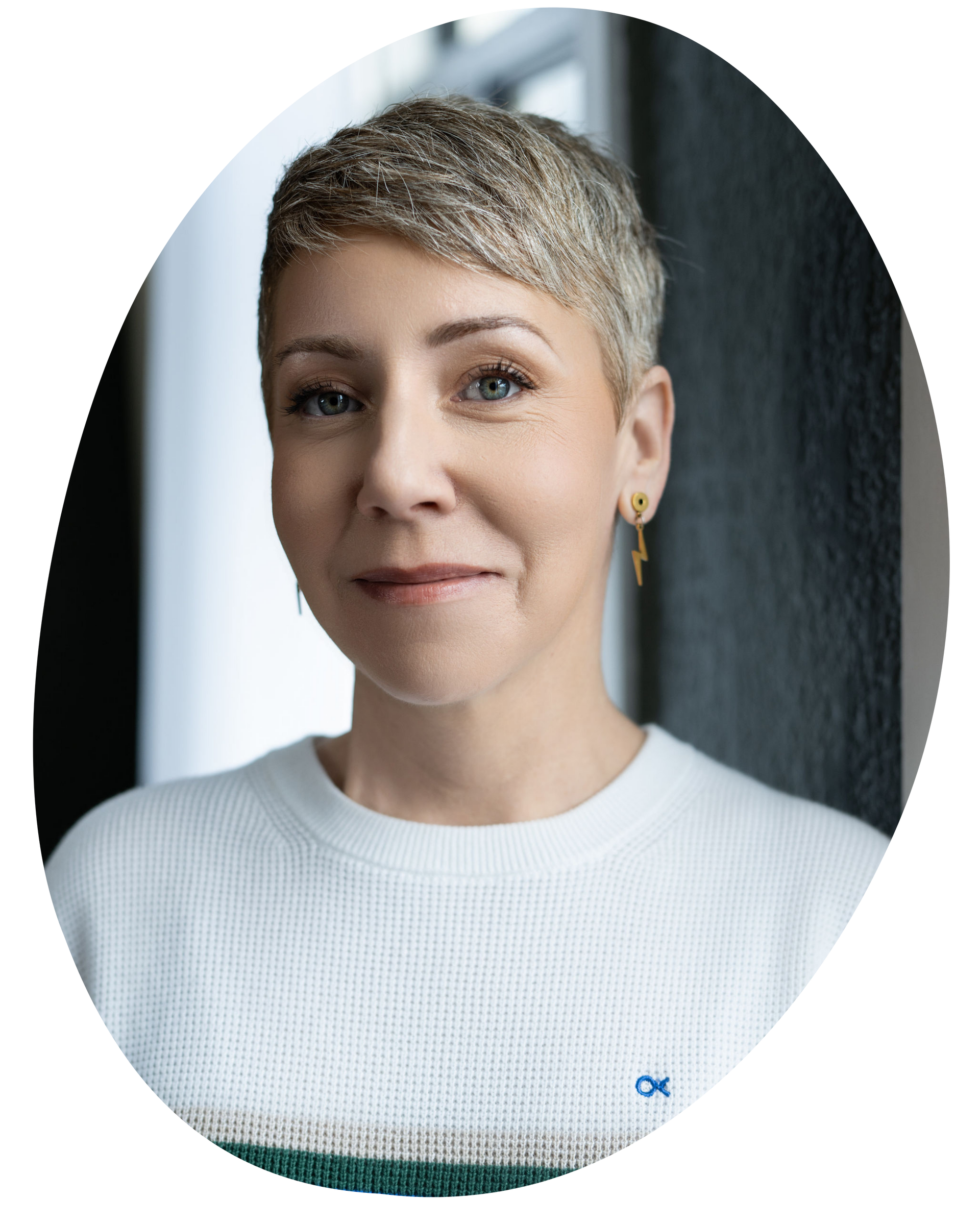
ADHD coach and founder of Quinn Geear Coaching.
I trained through ADD Coach Academy and work with adults at every point on the ADHD awareness spectrum, whether that's a diagnosis from last month, one from twenty years ago, or a long held hunch that's never been formally evaluated. I believe you don't need to become a different person, you need a more accurate understanding of who you already are.
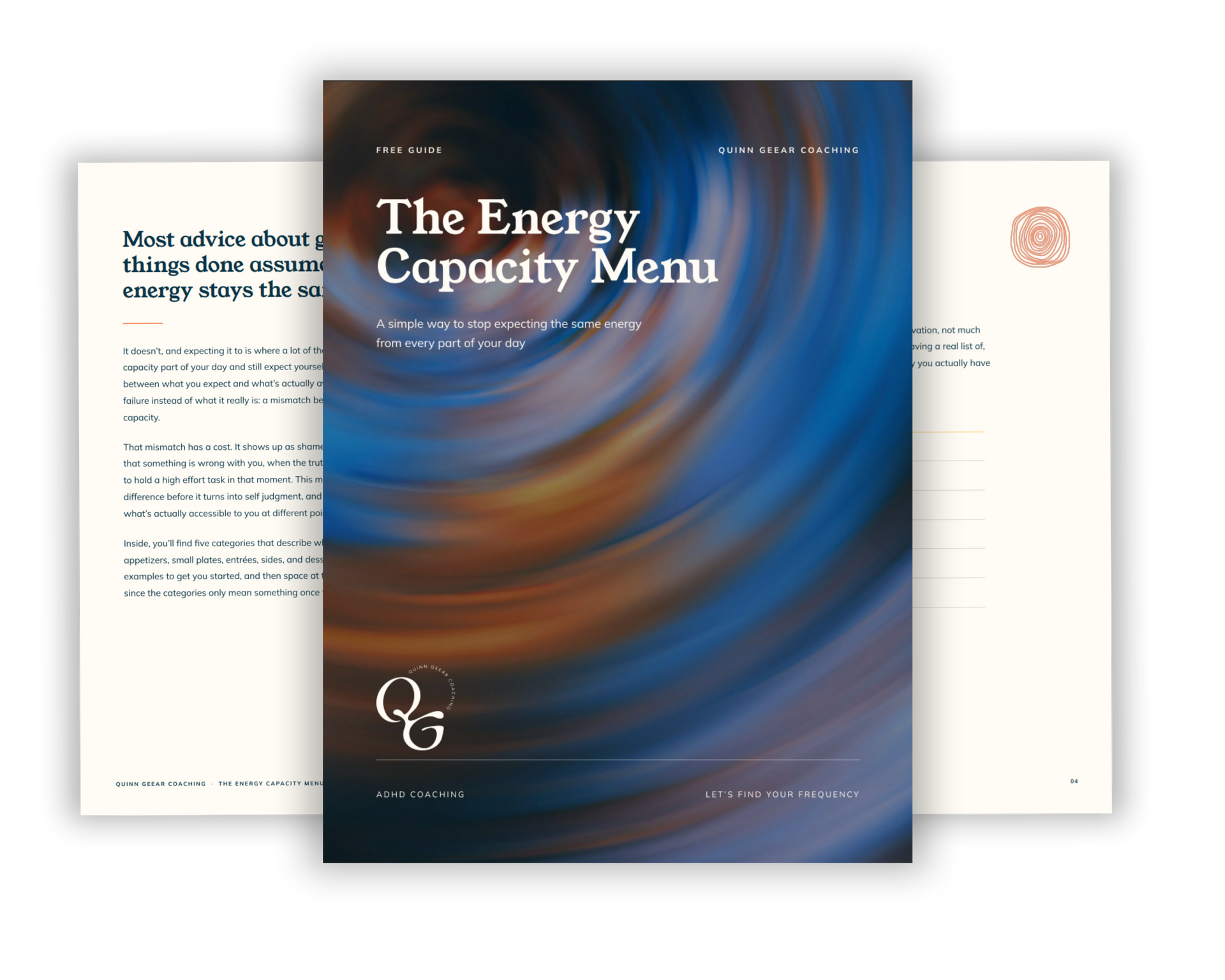
Let's work together.
You start with a free 50 minute Discovery Call. There’s no cost and no pressure, just a conversation about what's bringing you to coaching. If it feels like a fit, you move to
The Starter Package - Everyone Starts here:
- 1 x 90-minute intake session
- 4 x 60-minute ADHD Coaching sessions
- Rate: $830 (USD) ($90 intake + 4 sessions at $185/session, paid in advance.)
Ongoing Coaching - To continue the work after the Starter Package:
- 6 x 60-minute sessions
- Between session email check-in support and either one laser coaching, body doubling, or creative expression session each month.
- Rate: $1,100 (USD) (6 sessions at $185/session, paid in advance.)
Notes
All sessions happen over Zoom, scheduled no more than two weeks apart and there’s email/text support between sessions.
Frequently Asked Questions
What does neurodivergent-affirming ADHD coaching mean?
It means your attention, communication, sensory experience, energy, strengths, support needs, and environment are all part of what we pay attention to.
Sometimes the support is changing what you do. Sometimes the environment, expectations, communication, workload, or system around you needs to change too.
You decide what feels useful and what you want to work on.
Can coaching help me figure out what support I need?
Yes.
We can look closely at where something becomes difficult.
Is there too much noise? Too many decisions? Unclear instructions? Too much social interaction? Trouble starting? A sudden transition? No recovery time? Too much information living in your memory?
Once we understand what is creating the difficulty, we can experiment with support that addresses it.
Can coaching help me figure out what accommodations to ask for?
Yes.
We can look at what part of your environment, communication, schedule, workload, or task is creating difficulty and what change could make it more accessible.
That could include written instructions, fewer interruptions, predictable communication, flexible scheduling, a quieter workspace, advance notice of changes, additional structure, or something specific to your situation.
Whether something qualifies as a formal workplace accommodation is an employment and legal question. Coaching can help you get clear on what you need and prepare to communicate it.
What if I am functioning but spending too much energy to keep everything going?
Then the effort itself is useful information.
We can look at what you are compensating for, where you are masking, which environments take the most from you, what you keep pushing through, and where support could reduce some of that load.
The goal is to understand where your energy is going and give you more choices about how you use it.