ADHD Coaching for Creatives | Quinn Geear Coaching
You can have more ideas than you know what to do with and still struggle to get near the one you care about most. You can spend hours completely absorbed in making something, then go weeks wondering why you cannot find your way back into it. Half-finished pieces pile up. New interests keep arriving. Something you love can start carrying a surprising amount of pressure.
I work with creative and multi-passionate adults who want to understand their relationship with creativity, ADHD, attention, energy, and follow through with more curiosity and less judgment. I have kept an analog collage practice for more than a decade alongside a full career, and I know how much life can happen around the thing you still want to make space for.
This work is about creating a relationship with your creative life that feels more like yours.
What is ADHD & creatives coaching?
Creative work can ask for several very different kinds of attention.
Coming up with an idea is different from choosing one. Starting is different from staying with something once the initial pull changes. Finishing can require decisions, repetition, editing, organization, or sharing the work with other people. ADHD can affect each part differently.
You may also have several things you care about at once. Art, writing, music, a business idea, a new medium you suddenly need to learn everything about... all of them can feel meaningful.
Coaching gives us space to understand what is happening across that process. We can look at where you come alive, where you lose connection, what creates pressure, what helps you return, and how creativity can have a place in your life without needing to become another thing you are failing to keep up with.
Common ways this shows up
Every creative person with ADHD is different, but some experiences come up often.
- You start a lot of projects and have trouble finishing some of them. You may have several pieces, drafts, ideas, or creative projects in progress at the same time, with some sitting untouched for weeks or months.
- Your creative energy is inconsistent. There may be periods where you make a lot in a short amount of time, followed by stretches where it is hard to start, return to, or feel connected to the work.
- New ideas can pull your attention away from what you already started. A new project may feel exciting enough that the older one loses momentum before it is finished.
- You have several creative interests and struggle to decide where to put your time. When multiple ideas or mediums matter to you, choosing one can feel overwhelming and can make it harder to move forward with any of them.
- Finishing requires a different kind of effort than starting. Editing, organizing, making final decisions, documenting the work, submitting it, publishing it, selling it, or deciding it is done can be much harder than generating the original idea.
- You put a lot of pressure on yourself around creativity. You may judge yourself for not creating often enough, not finishing enough, being inconsistent, or not having a creative practice that looks the way you think it should.
Who this support is for
This may be useful if you:
- Have a creative practice you want more room for, whether it is part of your career, something you do alongside a day job, or something that keeps calling you back
- Have ADHD and see it showing up in your relationship with ideas, projects, attention, or follow through
- Care about several creative interests and want help deciding how they can coexist
- Want support finishing something that matters to you
- Have lost connection with creativity and want to understand what changed
- Want your creative life to feel more connected to your values, curiosity, and sense of who you are
How coaching supports this
My own creative practice is analog collage. I spend a lot of time moving pieces around, following something that catches my attention, changing my mind, pulling things apart, and discovering a connection I could not have planned from the beginning.
That experience shapes the way I approach this work.
I am interested in what keeps pulling at you. The unfinished things you still think about. The interests that keep returning. The parts of the process that give you energy, and the parts where something changes.
We can experiment with structure where structure helps. We can use body doubling when company makes it easier to enter the work. We can explore your values when there are too many possible directions. Sometimes the session itself can become creative space, where you bring the thing you are making and we work alongside each other while you reconnect with it.
The goal is a creative life you can have a relationship with over time. Something with room to change as you change.
What working together looks like
We start with a free 50-minute Discovery Call where we talk about what's bringing you to coaching, what creativity looks like in your life right now, and see if it feels like a good fit to work together.
From there, we meet over Zoom, usually weekly or every other week. You bring your projects, questions, ideas, stuck places, and whatever else is taking up space. I bring curiosity, reflective questions, creativity, structure, and an eye for connections and patterns.
We figure out together what would be useful.
How it works:
Step 1: Understanding your creative patterns
We start by mapping how attention, energy, motivation, values, and curiosity move through your creative life. We look at what pulls you in, what makes it easier to begin, what happens when you lose connection, and how the rest of your life affects your ability to create.
Step 2: Experiment with support
Once we understand where things are getting stuck, we try different kinds of support and pay attention to what changes.
That might mean narrowing down ideas, making a project smaller, using body doubling to help you start or stay with something, creating more structure around your time, or giving yourself space to experiment without needing to know where the work is going yet.
Step 3: Build a relationship with your own process
Over time, you get better at recognizing what you need at different points in the creative process. You can make more intentional decisions about what to continue, what to set aside, where you want support, and what you want creativity to mean in your life.
Meet your coach
I spent more than twenty years working in IT and leadership, and throughout most of that time I also kept making analog collage.
Collage gave me a place where I could follow curiosity, work visually, change direction, make unexpected connections, and let something emerge without knowing where it was going when I started. Long before my ADHD diagnosis in my forties, I had found a space where many parts of me had room to show up together.
That experience is a big part of what I bring to coaching. I pay attention to patterns and connections, and I am equally interested in your strengths, what gives you energy, what feels meaningful, and what you want more room for in your life.
I trained through ADD Coach Academy and am continuing my credentialing work through ADDCA, ICF, and PAAC. I coach adults across the country over Zoom.
What we can work on together
- Making room for creativity. Finding a place for creative work alongside everything else that matters in your life.
- Choosing where your attention goes. Working with multiple ideas and interests without requiring yourself to pursue all of them at once.
- Getting back into something that has stalled. Understanding what changed and what might help you reconnect.
- Following a project through different stages. Finding support for the parts that ask something different from you than generating the idea did.
- Making decisions about unfinished work. Choosing what you want to finish, what you want to leave open, and what you are ready to release.
- Building more meaning into your creative life. Connecting what you make with your values, identity, curiosity, and what feels alive for you.
Ways to support yourself
A few strategies that tend to help between sessions.
- Keep new ideas in one place. Write them down somewhere you will come back to so every new idea does not have to become a new project right away.
- Make it easy to return to a project. Leave yourself a note about where you stopped, what the next step is, or keep the materials visible so you do not have to rebuild context every time.
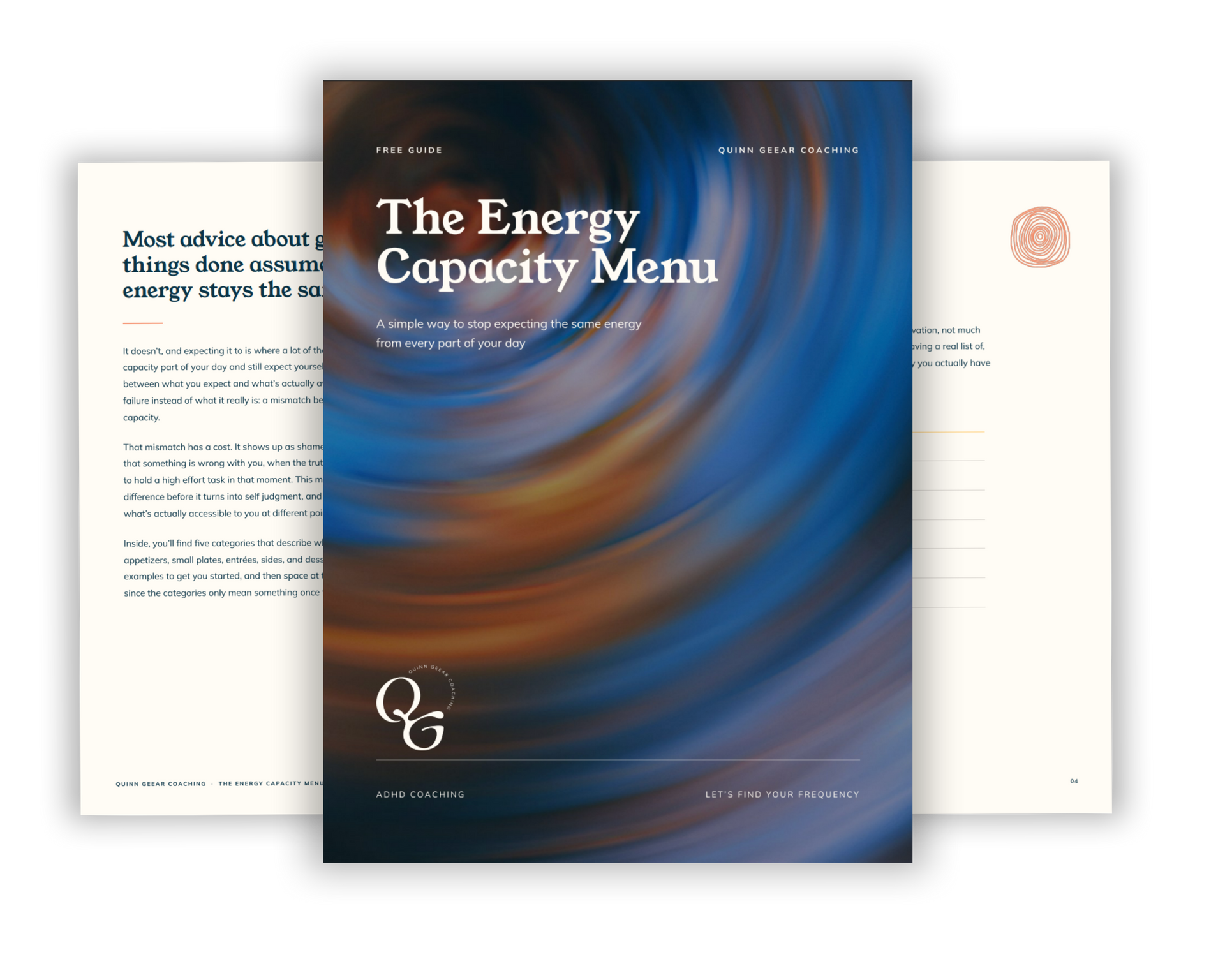
- Match the work to your energy capacity. Some days you may have enough for generating ideas or making something new. Other days may be better for sorting materials, editing, organizing, or doing one small step. Let the kind of creative work change with what you have available.
- Treat each stage of a project differently. Starting, experimenting, editing, finishing, and sharing may each need different amounts of structure, time, or support.
- Pay attention to which interests keep coming back. Some interests are short-lived. Others stay important over time. That can help you decide where you want to keep putting your energy.
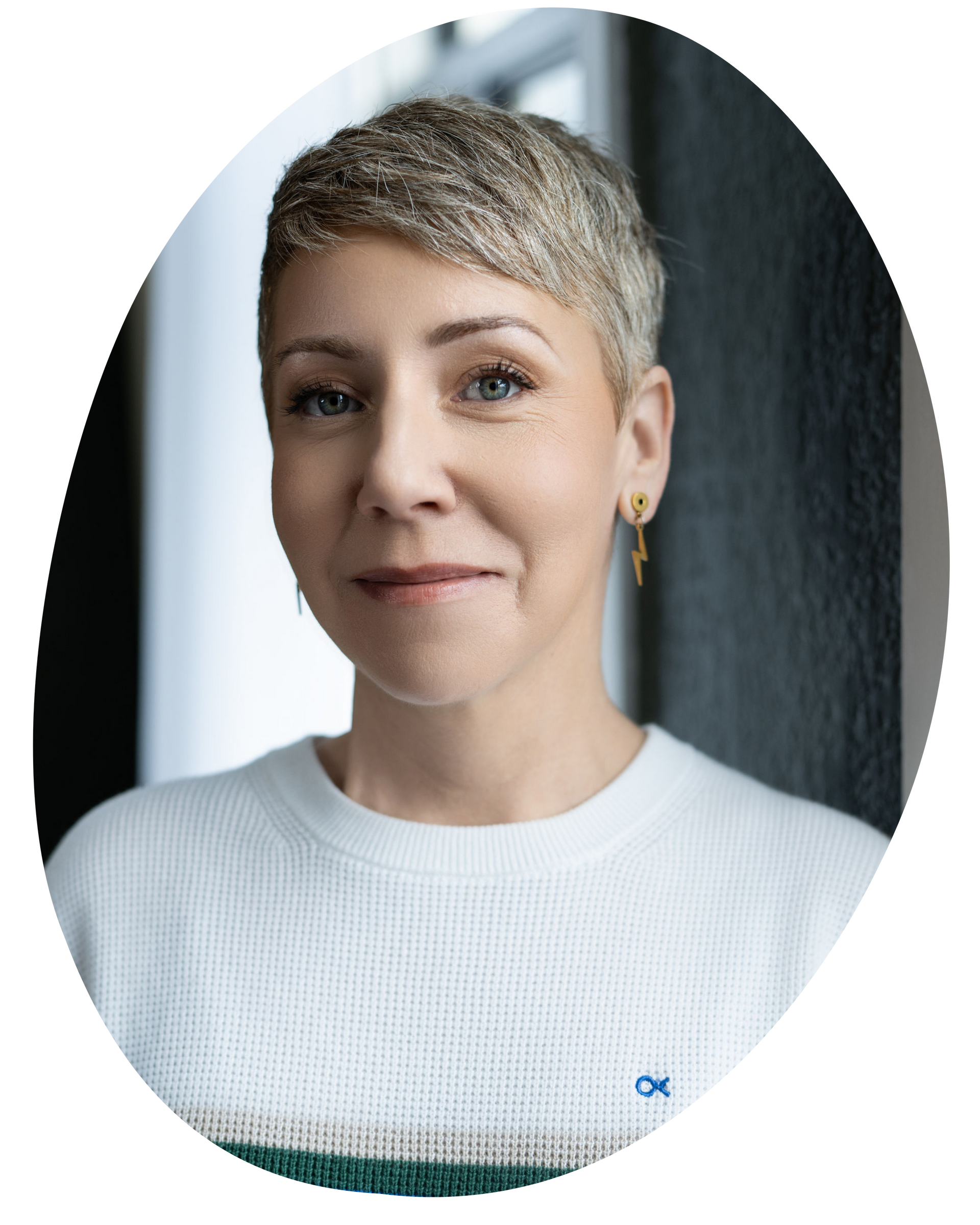
ADHD coach and founder of Quinn Geear Coaching.
I trained through ADD Coach Academy and work with adults at every point on the ADHD awareness spectrum, whether that's a diagnosis from last month, one from twenty years ago, or a long held hunch that's never been formally evaluated. I believe you don't need to become a different person, you need a more accurate understanding of who you already are.
Let's work together.
You start with a free 50 minute Discovery Call. There’s no cost and no pressure, just a conversation about what's bringing you to coaching. If it feels like a fit, you move to
The Starter Package - Everyone Starts here:
- 1 x 90-minute intake session
- 4 x 60-minute ADHD Coaching sessions
- Rate: $830 (USD) ($90 intake + 4 sessions at $185/session, paid in advance.)
Ongoing Coaching - To continue the work after the Starter Package:
- 6 x 60-minute sessions
- Between session email check-in support and either one laser coaching, body doubling, or creative expression session each month.
- Rate: $1,100 (USD) (6 sessions at $185/session, paid in advance.)
Notes
All sessions happen over Zoom, scheduled no more than two weeks apart and there’s email/text support between sessions.
Frequently Asked Questions
How does ADHD impact creativity?
ADHD can affect the whole creative process, from generating ideas to deciding which ones to follow, staying connected to a project, and bringing something to completion.
For some people, ADHD can come with a lot of ideas, unexpected connections, experimentation, and the ability to get deeply absorbed in something that feels interesting or meaningful. That can be a powerful part of creating.
What to do when creativity asks for a different kind of attention?
The harder part may come when creativity asks for a different kind of attention. Choosing between several ideas, organizing them, returning once the novelty has changed, working through repetitive parts, making decisions, editing, or finishing can all ask more from attention and executive function.
So ADHD may mean having plenty of creative energy while still needing support around what happens after the idea arrives. Understanding which parts of the process come easily to you, where you tend to get stuck, and what helps you stay connected can make creativity feel much more accessible.
Why can I focus on creative work for hours sometimes and barely start at other times?
Many adults with ADHD describe periods of very deep absorption in things that hold their attention, sometimes referred to as hyperfocus. ADHD also involves difficulty regulating and directing attention, which means access to that level of focus can feel inconsistent.
Instead of expecting the same kind of focus every time you create, it can help to understand what conditions tend to pull you in and what support helps on days when that connection is harder to access.
How do I make room for creativity when work and life take most of my capacity?
Start by being honest about how much capacity you have left and what kind of creative work is available to you within it. Some days you may have enough for focused making. Other days, creativity might look like gathering materials, jotting down an idea, looking through references, or doing something small with your hands for ten minutes. It can also help to stop treating creativity like something that only happens when you have a large block of time or produce something finished.
Making room for it may mean protecting a small pocket of energy, lowering the barrier to starting, or keeping your materials easy to access so creativity has somewhere to go when the opening appears.
The goal is to keep a relationship with creativity that can flex with your life, so it does not disappear every time work or responsibilities take more out of you.