ADHD Career Coaching | Quinn Geear Coaching
You can walk into a high stakes meeting and think on your feet without missing a beat, then stare at a two line email to your manager for three days without sending it. You can be the person everyone calls when something goes sideways while your own inbox, expense reports, or performance review prep quietly pile up.
That gap can be exhausting, especially when you know you are capable and still cannot consistently access that capability in the ways your job asks you to.
I work with adults who are trying to understand what is happening at work and figure out what they need to make their career feel more manageable, grounded, and sustainable. I spent more than twenty years in IT and leadership before being diagnosed with ADHD in my forties, so I know this terrain from both sides of the desk.
What is ADHD career coaching?
ADHD can affect attention, organization, time management, task initiation, follow through, and the ability to stay with longer projects. At work, that can create some strange contradictions.
You can know exactly what needs to happen and still struggle to begin. You can spend hours deeply focused on one project and have trouble shifting to the next one. You can handle complexity all day and get completely stuck on an administrative task that should take ten minutes.
ADHD career coaching gives us a place to get specific about where work is getting harder than it needs to be. We can look at your role, workload, communication, career goals, energy, and the places where things keep snagging. From there, we figure out what support would make a meaningful difference.
Common ways this shows up
- Everything feels equally important. You know you need to prioritize, but deciding what comes first can take almost as much energy as doing the work itself.
- Getting started or following through is the hardest part. You may understand the task completely and still have trouble beginning it, returning to it, or carrying it across the finish line.
- Meetings disappear faster than you expect. You leave knowing there were decisions, action items, and things you meant to remember, then realize later that you cannot pull all of it back up.
- You get stuck thinking through every possible angle. A decision that should be fairly simple turns into researching, comparing, second-guessing, and waiting until you feel certain enough to move.
- You know you need more support, but you do not know what to ask for. Maybe something about the workload, communication, environment, or expectations is not working, but turning that into a concrete request feels hard.
- Your role keeps moving farther away from what you are good at. You may be handed more responsibilities because you are capable, then realize the new role asks for less of your strengths, interests, or values and more of the things that drain you.
- Success starts to require becoming someone you do not want to be. You may feel pressure to communicate, lead, organize, socialize, or perform in a way that asks you to constantly edit yourself to belong there.
- You can be highly capable and still feel inconsistent. You might handle the complicated problem everyone else is avoiding, then get stuck on the email, paperwork, scheduling, or follow up sitting right behind it.
Who this support is for
This may be a strong fit if you:
- Have ADHD and want support with the way it is showing up professionally.
- Are doing well on paper and spending far more energy than you want to maintain it.
- Are moving into a new role, considering a career change, returning to work, or figuring out whether you still want the career you have.
- Manage people or run your own business and need somewhere to think through the parts no one else is structuring for you.
- Want practical support while also paying attention to what you value, what drains you, and what you want your working life to feel like.
How coaching supports this
Career coaching starts with your specific situation. The job matters. Your manager matters. The amount of autonomy you have matters. So do the parts of the work you love, the parts you avoid, and what happens to your energy throughout the day.
We use that information to figure out where support would help. That could mean breaking down a project that keeps stalling, preparing for a difficult conversation, changing the way you track work, setting clearer boundaries around workload, or thinking through whether you want to stay in the role at all. Some sessions are strategic. Some are exploratory.
What working together looks like
The first conversation is a free 50-minute Discovery Call. From there, we meet over Zoom, usually weekly or every other week. You bring the full context of your work, your experiences, and what matters to you. I bring curiosity, reflective questions, creativity, structure, and an eye for patterns. We figure things out together, with you deciding what feels useful and where you want to go next.
How it works:
Step 1: Understanding your work patterns
We start by mapping how your attention, energy, motivation, and values move through your workday. We look at where you feel engaged, where things start to drag, what pulls you in, what drains you, and where the friction keeps showing up across meetings, deadlines, communication, workload, and transitions between tasks.
That gives us a clearer picture of what is happening before we start changing anything.
Step 2: Building strategies that fit your life
We experiment with support based on what we are seeing. That might involve changing a process, adding external structure, preparing language for a conversation, breaking something into smaller pieces, or using body doubling to move a stuck task forward.
Step 3: Building lasting self trust at work
We pay attention to what changes and what does not. Over time, you get clearer on what you need, what feels aligned, and what you want to stay true to in your work.
That can mean making career decisions that reflect your values, asking for support before you are at your limit, taking up more space as yourself, and finding places where you can mask less and still feel solid in who you are.
Meet your coach
I spent more than twenty years working in IT and leadership before I was diagnosed with ADHD in my forties. I spent a lot of those years being good at my job while also wondering why certain parts of it took so much out of me.
My career taught me to notice patterns, understand context, and look closely at the conditions around what is happening. The work is also about noticing your strengths, what gives you energy, what matters to you, and where you feel most like yourself. From there, we can look at how to build more meaning, alignment, and room for those parts of you into the way you work.
I trained through ADD Coach Academy and am continuing my credentialing work through ADDCA, ICF, and PAAC. I coach entirely over Zoom and work with adults across the country.
What we can work on together
- Workload and capacity. Figuring out what you can carry and what needs to change when everything feels equally urgent.
- Communication. Preparing for conversations with managers, coworkers, clients, or the people you lead.
- Career decisions. Thinking through promotions, job changes, entrepreneurship, returning to work, or whether you are ready for something different.
- Follow through. Working with the projects, administrative tasks, deadlines, or loose ends that keep getting stuck.
- Burnout and sustainability. Paying attention to what your current way of working costs you and what you want to change.
- Self-trust at work. Getting clearer about what you need and trusting yourself enough to use that information when you make decisions.
Ways to support yourself
- Pay attention to energy along with time. Notice when certain kinds of work are easiest to access and what tends to drain you faster.
- Put deadlines somewhere visible. Give important dates somewhere to live outside your memory and somewhere you will encounter them more than once.
- Leave room after demanding parts of your day. If three back to back meetings wipe you out, that is useful information when you are planning the fourth hour.
- Notice what you want more of. Pay attention to the work that pulls you in, gives you energy, or leaves you feeling engaged. That information matters when you are thinking about where your career goes next.
- Try body doubling for something you keep circling. Work alongside another person, in person or virtually, and see whether their presence changes your ability to begin or stay with it.
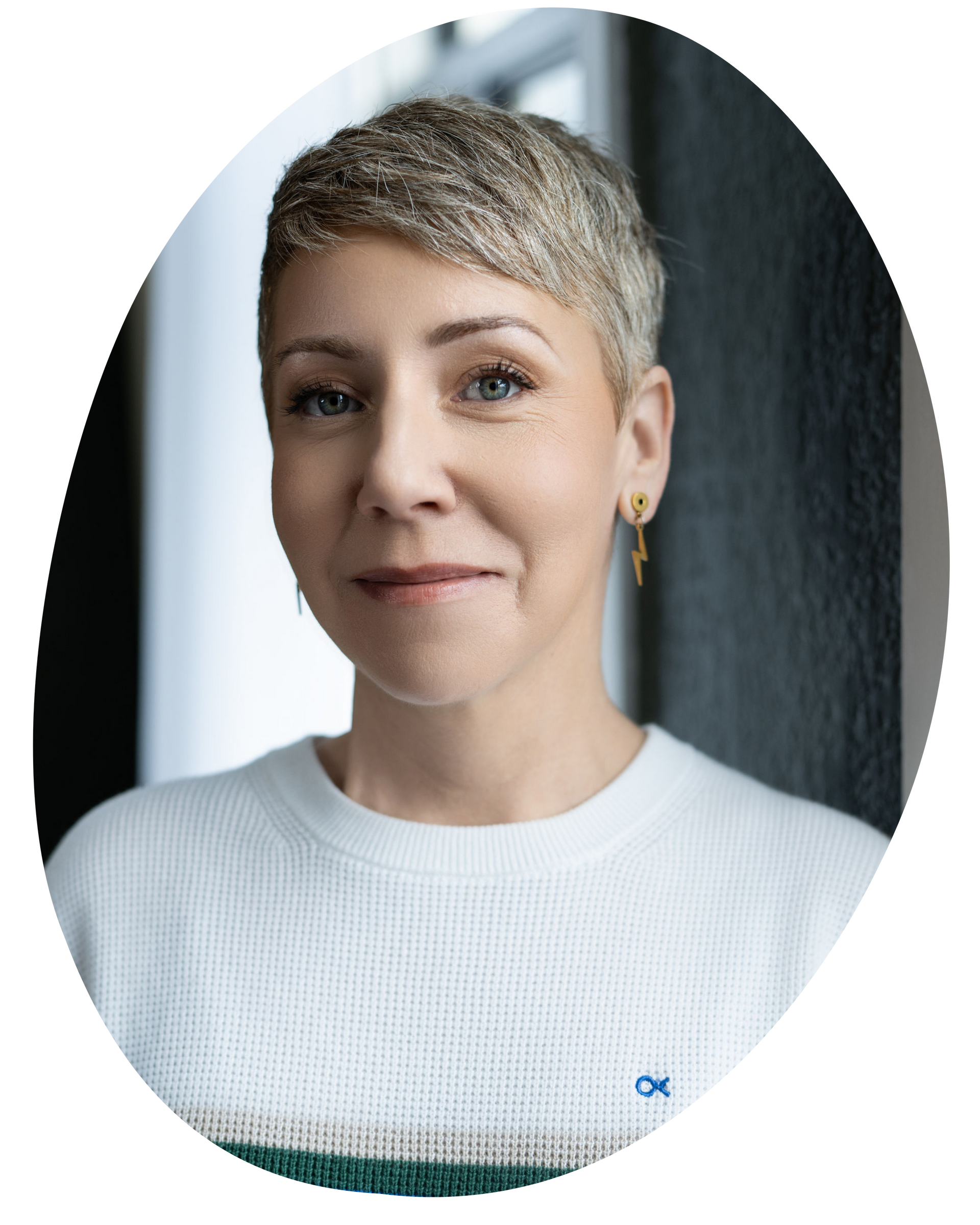
ADHD coach and founder of Quinn Geear Coaching.
I trained through ADD Coach Academy and work with adults at every point on the ADHD awareness spectrum, whether that's a diagnosis from last month, one from twenty years ago, or a long held hunch that's never been formally evaluated. I believe you don't need to become a different person, you need a more accurate understanding of who you already are.
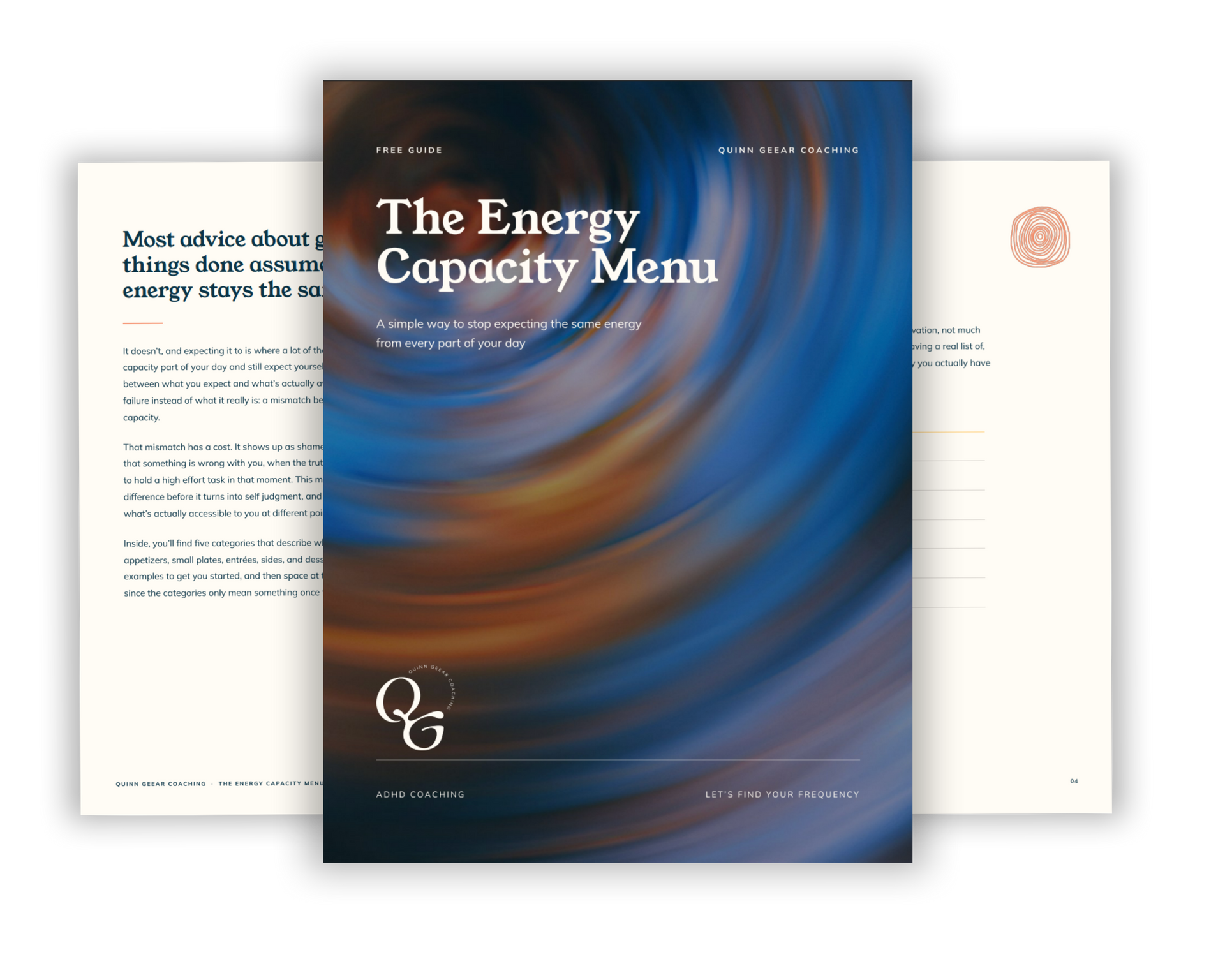
Let's work together.
You start with a free 50 minute Discovery Call. There’s no cost and no pressure, just a conversation about what's bringing you to coaching. If it feels like a fit, you move to
The Starter Package - Everyone Starts here:
- 1 x 90-minute intake session
- 4 x 60-minute ADHD Coaching sessions
- Rate: $830 (USD) ($90 intake + 4 sessions at $185/session, paid in advance.)
Ongoing Coaching - To continue the work after the Starter Package:
- 6 x 60-minute sessions
- Between session email check-in support and either one laser coaching, body doubling, or creative expression session each month.
- Rate: $1,100 (USD) (6 sessions at $185/session, paid in advance.)
Notes
All sessions happen over Zoom, scheduled no more than two weeks apart and there’s email/text support between sessions.
Frequently Asked Questions
What are some good jobs for people with ADHD?
For many neurodivergent people, the environment around the work matters just as much as the job itself. Two people with ADHD can have the same role and need completely different things to feel engaged, supported, and able to do their best work.
It can help to look for the conditions that make work more accessible to you. That might mean enough structure to know what is expected, with enough flexibility to decide how you get there. Clear communication and written follow up after meetings. More control over noise, interruptions, or where you work. Regular feedback, support with prioritization, or the ability to move throughout the day. It can also mean having work that uses your strengths, holds your interest, connects to your values, and gives you room to be more fully yourself.
Part of career coaching can be figuring out what those conditions are for you. Once you understand that, you have much more useful information for choosing roles, shaping the one you already have, and knowing what support or accommodations you may want to ask for.
What does it look like to build a career around my strengths, values, and capacity?
Building a career around your strengths, values, and capacity starts with understanding what draws you in, what gives you energy, what feels meaningful, and what kind of environment helps you do your best work. That includes the pace, expectations, autonomy, and amount of space you need for the rest of your life.
When those pieces line up more closely, work can feel steadier, more engaging, and more sustainable. You may feel more like yourself, more connected to what you are doing, and more confident making choices that reflect what you want instead of just what you can push yourself to handle.
What kind of support can make work feel more manageable?
The most useful support is specific to where the friction is happening. Some people need clearer priorities or written follow up after meetings. Others need more flexibility around when or where they work, fewer interruptions, regular check-ins, or help turning a large project into something they can enter.
Part of the work may be figuring out what would help, what you can create for yourself, and what you want to ask your employer for. You do not have to already know the language for the request. Sometimes getting specific about what is difficult and what changes the experience is where the answer starts.
How can I feel more like myself at work and mask less?
Masking can become a way of staying safe, appearing capable, or meeting expectations in workplaces where being different feels risky. Over time, constantly monitoring how you speak, move, respond, organize yourself, or show what you need can take a lot of energy.
Masking less can start with noticing where you are editing yourself and deciding where you want more choice. Maybe you communicate a need instead of quietly compensating for it. Maybe you stop treating an accommodation like something embarrassing to ask for. Maybe you make a career decision based on what matters to you instead of what the next expected step is.
You get to decide what taking up more space as yourself looks like. The goal is having more room to make those choices intentionally and spending less of your working life trying to become the person you think the workplace expects you to be.